



Key Takeaways
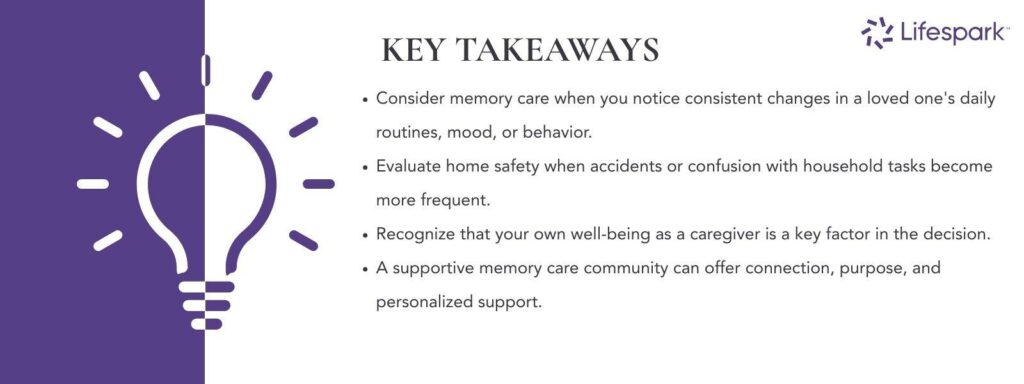
- Consider memory care when you notice consistent changes in a loved one’s daily routines, mood, or behavior
- Evaluate home safety when accidents or confusion with household tasks become more frequent
- Recognize that caring for your own physical and mental health as a caregiver is a key factor in the decision
- A supportive memory care community can offer connection, purpose, and personalized care
A Time for Thoughtful Consideration
Many family caregivers wonder if their loved one needs more support than they can provide at home. Changes in their needs and yours can lead you to consider communities, like The Legacy of Farmington Senior Living, that offer specialized memory care.
The signs can be subtle at first—a forgotten appointment, unopened mail piling up, or a bit of confusion. These small moments can lead to bigger questions about what comes next and how to meaningfully support their well-being.
The time to consider memory care is when you notice consistent changes in a person’s daily life, when safety becomes a concern in their current home, and when a family caregiver’s needs increase significantly.
The decision is about finding a supportive environment that honors a person’s dignity and their desire for independence. Understanding the available senior living lifestyle options can help you find a setting that provides the right level of help.
Noticeable Changes in Daily Life
Shifts in Personal Care and Hygiene
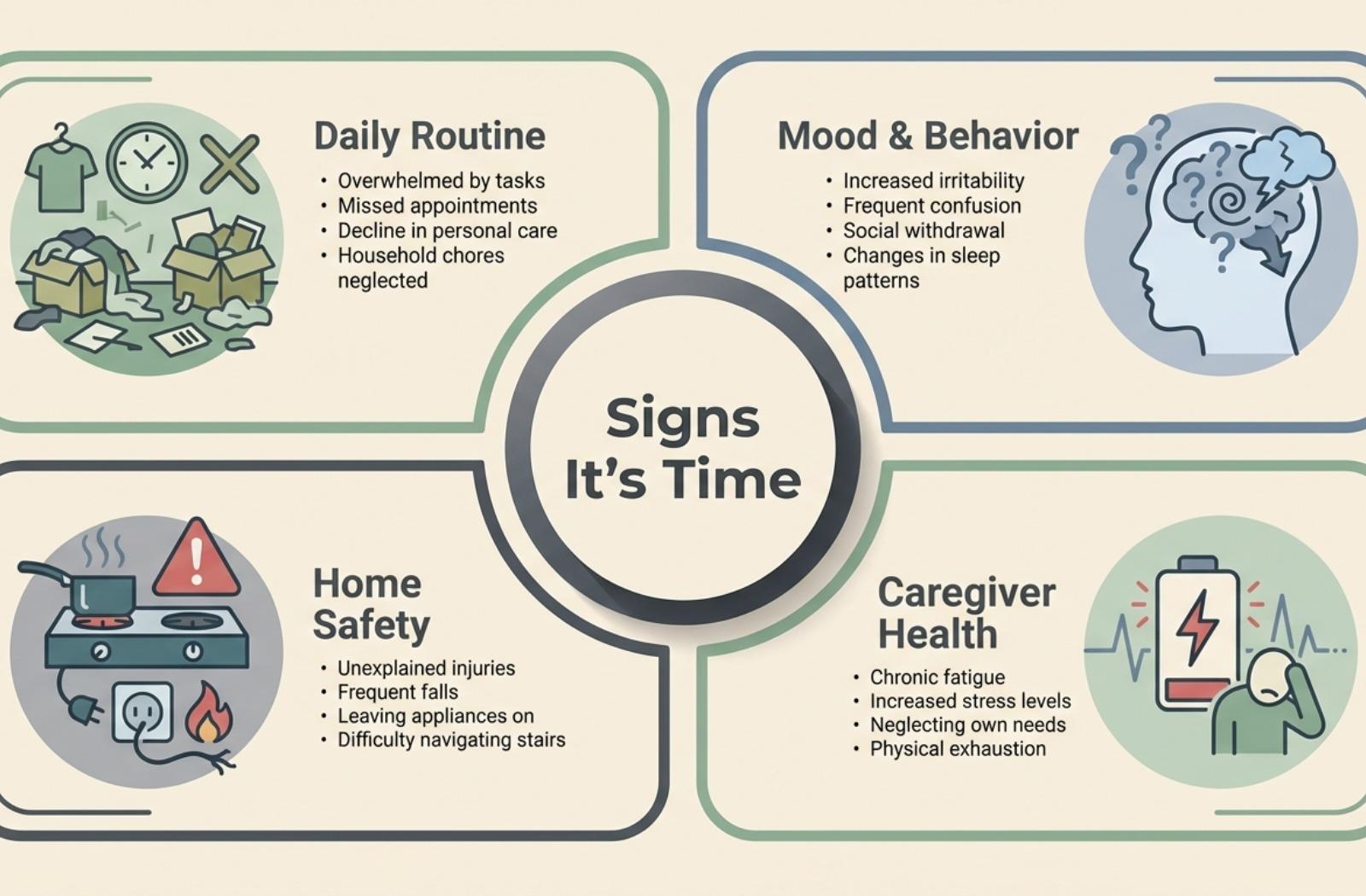
Changes in personal routines can be an early indicator that more support is needed. You might observe a loved one having difficulty with grooming, bathing, or dressing. Their home, once very tidy, may start to look neglected, with mail piling up or dishes left undone.
These core self-care tasks, often referred to as activities of daily living (ADLs), are a key measure of a person’s ability to live independently, comfortably, and safely.
Forgetfulness about important daily tasks, such as missed medications or meals prepared but not eaten, also suggests that managing daily life on their own is becoming more challenging.
Changes in Mood and Behavior
A person’s emotional state can also provide clues about their cognitive health.
You may see a loved one become more withdrawn, pulling away from the social activities they once enjoyed. They might express new feelings of anxiety, agitation, or confusion more frequently, sometimes without a clear cause.
These shifts can be early warning signs of dementia and may include frequent misplacing of things or poor judgment. These behavioral changes are not a reflection of who they are but rather a sign that their world is becoming more difficult to navigate.
A new routine in a structured, supportive setting can help restore a sense of calm and predictability to their daily life.
Home Safety Considerations
Common Household Risks
The home should be a place of comfort, but it can present risks for someone experiencing memory changes.
You might worry about their safety in the kitchen, such as leaving the stove on or forgetting about food cooking in the oven. The possibility of them wandering and getting lost is another serious concern, as it can happen unexpectedly and poses significant risks.
Understanding the triggers behind this wandering behavior can help families and caregivers create a safer environment. Everyday tasks like managing finances or paying bills can also become overwhelming and lead to mistakes.
When you start to actively and regularly worry about these potential dangers, it may be a sign that their current environment is no longer the safest option.
When the Home Becomes a Challenge
An increase in physical accidents, like falls or unexplained bruises, is a clear red flag. You may notice your loved one struggling with stairs or having difficulty moving around furniture.
The risk of injury from falls increases with age, and a once-cozy home can create obstacles that significantly impact your loved one’s ability to move safely. These physical signs and mobility concerns indicate that their living space may not be suited for their changing needs.
Many senior living communities design layouts with fall-prevention strategies in mind, so older adults regain the confidence to move independently with appropriate support.
The Importance of Caregiver Health
Signs You Need More Support
Caring for a loved one is a meaningful role, but it can also be physically and emotionally demanding. You might start to feel overwhelmed, constantly tired, or irritable. When your own health appointments and needs take a back seat, it’s a signal that you may be stretched too thin.
These feelings are common symptoms of caregiver burnout, a state of physical and emotional exhaustion. It’s okay to acknowledge that you need more support.
Specialized memory care services can provide a strong support system not just for your loved one, but for your entire family, giving you peace of mind.
How a Supportive Community Helps
A memory care program can offer more than safety; it provides a structured daily routine that can reduce anxiety and confusion. Residents have many opportunities for social engagement with peers, helping to relieve loneliness and foster new friendships.
Reinforcing a sense of community is powerful, as ongoing research highlights how social isolation can pose health risks for older adults. Activities designed to support cognitive health and personal interests give residents a renewed sense of purpose.
A focus on connection helps people thrive and feel they belong to a vibrant community.
Your Family’s Path Forward at The Legacy of Farmington
Deciding on the next step is a journey you can take together. It starts with open conversations with your loved one and other family members about what you have observed and what everyone hopes for the future.
Exploring different senior living options, like assisted living and memory care, can give you a clear picture of the support available.
At The Legacy of Farmington, our team is here to help you navigate these questions with kindness and understanding. Schedule a tour today with your loved one to learn more about how our dynamic community can support an enriching, positive experience for your entire family.