

Key Takeaways
- Early Alzheimer’s signs include memory lapses, confusion, and trouble finding words.
- Mood shifts, personality changes, and neglected daily habits can signal something more serious.
- Approaching a loved one with calm and compassion makes difficult conversations easier.
- Memory care and assisted living communities offer structured, personalized support for families.
- Documenting changes and exploring senior living options early can make a real difference.
Early Signs That Deserve a Closer Look
You’ve probably brushed off a forgotten name or a misplaced set of keys as just a normal part of aging. And sometimes, that’s all it is. But when those small moments start happening more often, or start disrupting everyday life, they may be worth a second look.
Recognizing the early warning signs of Alzheimer’s can help families respond sooner, connect loved ones to the right care, and face the road ahead with more clarity and support. The signs aren’t always dramatic. Often, they show up quietly in the details of daily life. At The Legacy of Farmington, families navigating these questions can find specialized memory care support designed around their loved one’s unique needs.
What Early Alzheimer’s Signs Actually Look Like
One of the first things families notice is memory trouble that goes beyond the occasional slip. A loved one might forget appointments repeatedly, ask the same question several times in one conversation, or lose track of recent events entirely. These aren’t just senior moments. They’re interruptions to daily routines that start to add up. The Alzheimer’s Association lists 10 early warning signs that can help you tell the difference between normal forgetfulness and something more significant.
Confusion with familiar places or people is another early sign. A parent might get disoriented driving to a neighborhood they’ve known for decades, or they might struggle to recognize someone close to them in a moment of stress or fatigue. It can be unsettling to witness, and it’s okay to feel that way.
Trouble finding the right words in conversation is also common. Your loved one might pause mid-sentence, substitute unusual words, or lose their train of thought more often than before. These moments can feel frustrating for everyone involved, but they’re meaningful signals worth paying attention to.
Behavioral and Mood Changes Worth Paying Attention To
Shifts in Personality
You might notice your loved one pulling back from friends and family gatherings they used to enjoy. Social withdrawal is one of the quieter signs, but it’s significant. When someone who was once outgoing starts preferring isolation, it can point to something deeper than just a preference for quiet.
Unusual anxiety, sudden suspicion, or unexplained mood swings are also worth noting. Your loved one might become easily upset in situations that never bothered them before, or they might express distrust toward people they’ve known for years. These shifts in personality are often more telling than memory changes alone. Learning more about what Alzheimer’s disease involves can help your family feel more prepared and less caught off guard.
Changes in Daily Habits
Personal hygiene is one area where early changes often show up. Skipping showers, wearing the same clothes repeatedly, or letting housekeeping slide can all be signs that something has changed. It’s not about judgment. It’s about noticing a shift from what was once routine.
A loss of interest in longtime hobbies is another signal. If your mom suddenly stops tending her garden, or your dad no longer reaches for his favorite books, take note. When the things that once brought joy start to fade without explanation, it can be an early indicator of cognitive change. The National Institute on Aging offers helpful guidance on telling apart normal age-related forgetfulness from signs of dementia.

How to Talk to a Loved One About Your Concerns
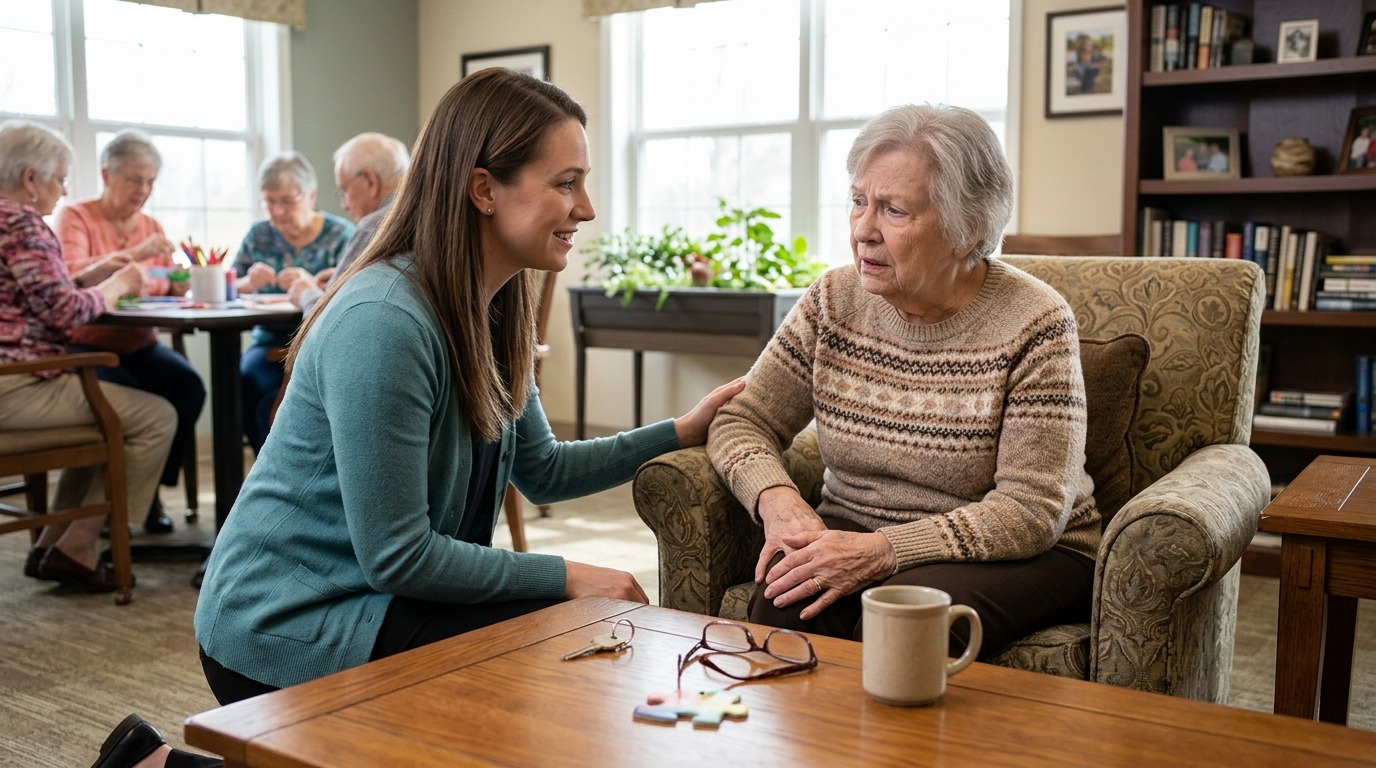
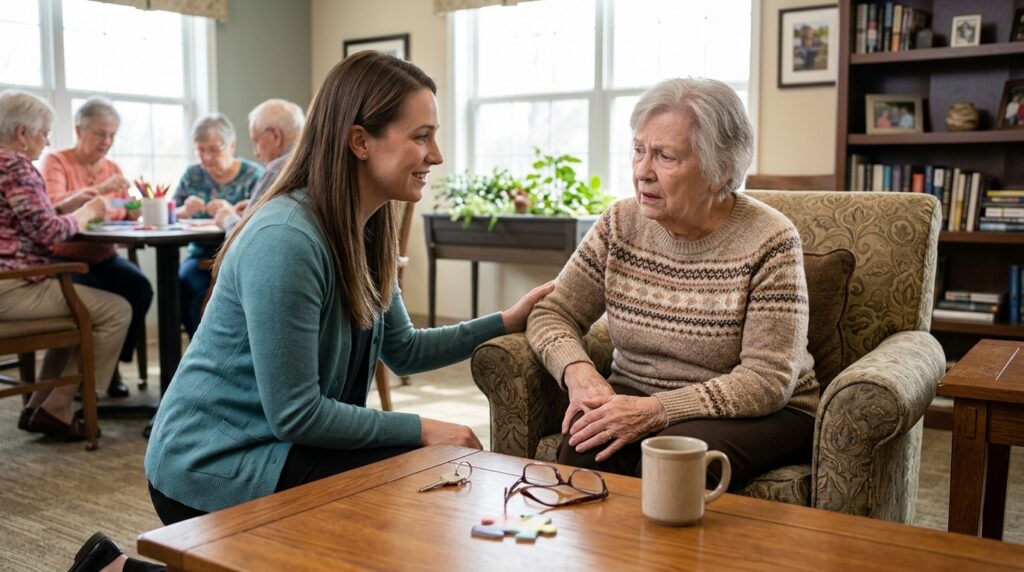
Finding the right moment matters. Choose a calm, private setting where your loved one feels comfortable and at ease. A familiar space, like their home or a favorite spot, can make a hard conversation feel a little softer. Avoid bringing it up in the middle of a stressful situation or around a crowd.
Lead with love, not alarm. Instead of listing everything you’ve noticed at once, start by simply saying you care and that you’ve been thinking about them. Let the conversation breathe. Listening more than you speak can open doors that a list of concerns might accidentally close. Our family resources page at The Legacy of Farmington includes a memory care guide that can help your family prepare for these kinds of conversations.
Memory Care and Senior Living Support Options
What Memory Care Offers Families
Memory care communities are built around the unique needs of those living with cognitive changes. Personalized daily routines help residents feel grounded and secure, reducing confusion and anxiety. Familiar rhythms throughout the day, like consistent meal times and gentle activities, can bring real comfort.
Trained, compassionate care teams are available on-site around the clock. These team members understand how to communicate with and support residents in ways that feel respectful and kind, not clinical. For families, that kind of attentive presence brings genuine peace of mind.
Next Steps for Families Who Spot the Signs
Start by writing things down. Note specific changes, the date they happened, and how often they occur. This kind of record can be incredibly helpful when speaking with a doctor or exploring care options. Concrete details matter more than general impressions.
From there, consider scheduling a visit to a senior living community. Seeing the environment, meeting the team, and understanding what daily life looks like can help your family make decisions from a place of knowledge rather than uncertainty.
At The Legacy of Farmington, our door is always open for families who want to explore what compassionate memory care and senior living support can look like for their loved one. Reach out through our community contact page to start that conversation and schedule a tour.