

Key Takeaways
- Music therapy is a structured, intentional approach, not just background listening.
- Activating multiple areas of the brain, music can support memory recall.
- Music can lift mood, ease agitation, and support mental clarity.
- Senior living communities often weave music therapy into assisted living and memory care programs.
- Families can play an active role by sharing familiar songs with loved ones.
The Power of a Song You Never Forgot
There’s something meaningful about hearing a song from decades ago and having memories come rushing back. The melody, the moment, and even the emotions tied to it can feel familiar. For many seniors, music can offer a connection to memories and experiences from their past.
Music therapy uses that connection intentionally to support cognitive health, emotional well-being, and quality of life in meaningful ways. Whether your loved one is in a memory care program or simply looking for more engagement in daily life, music can be a meaningful addition to their daily routine.
How Music Therapy Works
Music therapy isn’t putting on a playlist and calling it a day. It’s a structured, therapeutic approach led by trained music therapists who work toward a specific goal.
That distinction matters. Background music can be enjoyable, but music therapy goes deeper. A music therapist observes responses, adjusts in real time, and tailors the experience to each person’s needs. It’s personal, and that’s what makes it so effective for seniors.
The Connection Between Music & the Brain
How Music Reaches the Brain
When someone hears music, multiple parts of the brain light up at once. It’s one of the few activities that engages so many areas simultaneously, from memory to emotion to movement. A familiar song, in particular, can trigger a strong response almost instantly.
Rhythm also plays a role. A steady beat can help support focus and mental engagement, giving the brain something to follow and hold onto. For seniors who struggle with staying present, that rhythmic structure can be grounding in a gentle, natural way.
Why this Matters for Cognitive Health
When music activates so many parts of the brain at once, it creates opportunities for memory recall and mental sharpness that other activities may not reach as easily. Research on music and memory in older adults suggests that regular engagement with music therapy can help slow cognitive decline over time.
It can also reduce feelings of confusion and anxiety, which are common challenges for many seniors. That emotional relief isn’t a small thing. It directly supports how clearly and comfortably someone is able to think and engage with the world around them.
Cognitive Benefits of Music Therapy for Seniors
Memory & Recall
Familiar songs have a unique ability to unlock long-term memories. A tune from someone’s 30s might bring back a face, a place, or a feeling that seemed out of reach. For those in memory care programs, this kind of connection can be deeply meaningful.
It’s not about remembering everything. It’s about moments of recognition and connection that restore a sense of self, even briefly.
Mood & Mental Clarity
Music therapy can lift mood in ways that feel natural and unforced. It reduces emotional distress and supports a calmer, clearer state of mind. For seniors, it can also ease agitation and make daily interactions smoother.
When someone feels more at ease emotionally, their thinking tends to follow. Music creates a kind of internal calm that clears space for better focus and more genuine engagement throughout the day. Music therapy has also shown promise as a supportive, non-medical approach to improving well-being in senior living settings.
Music Therapy in Senior Living Communities
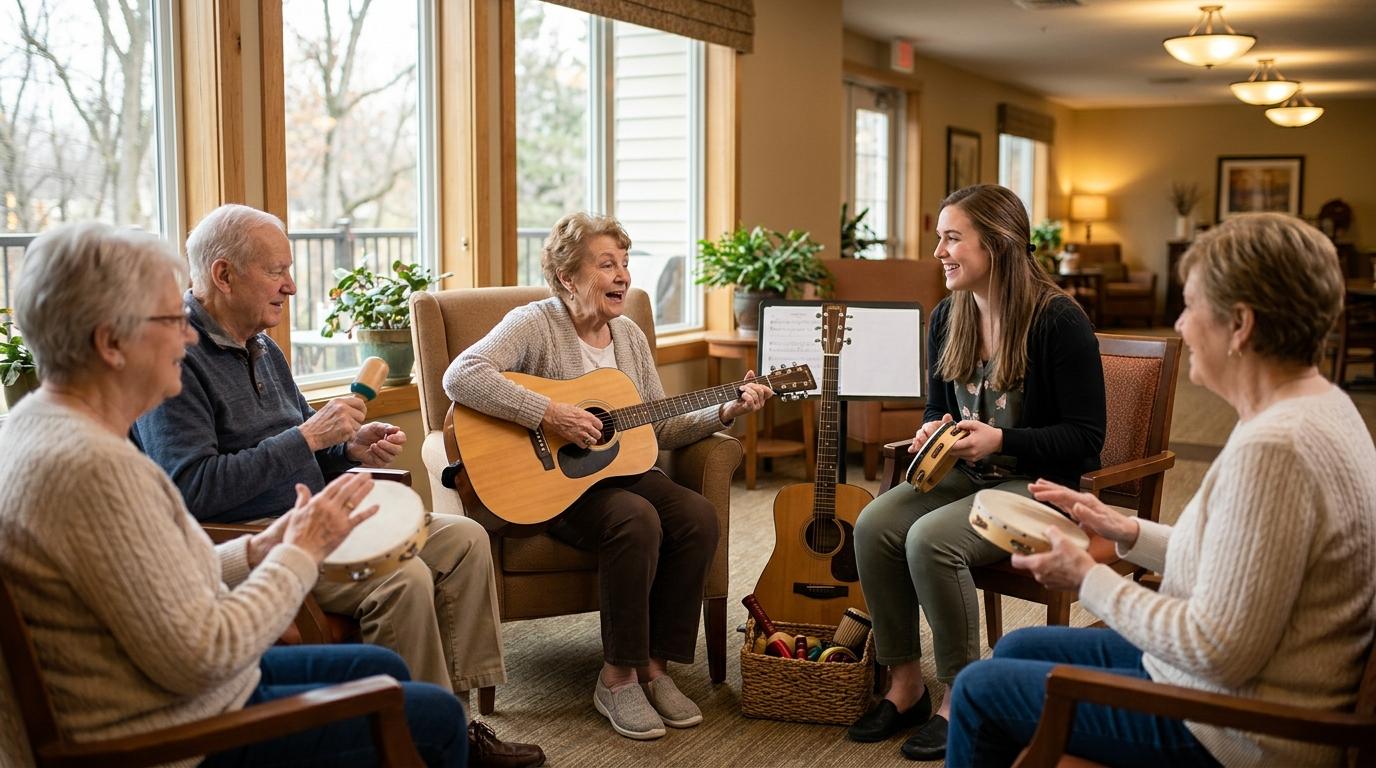
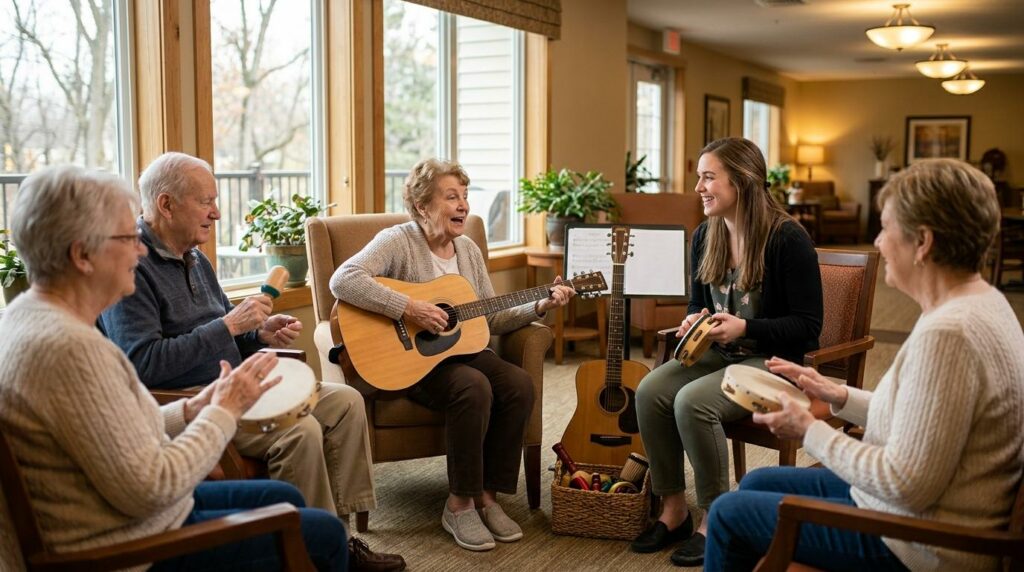
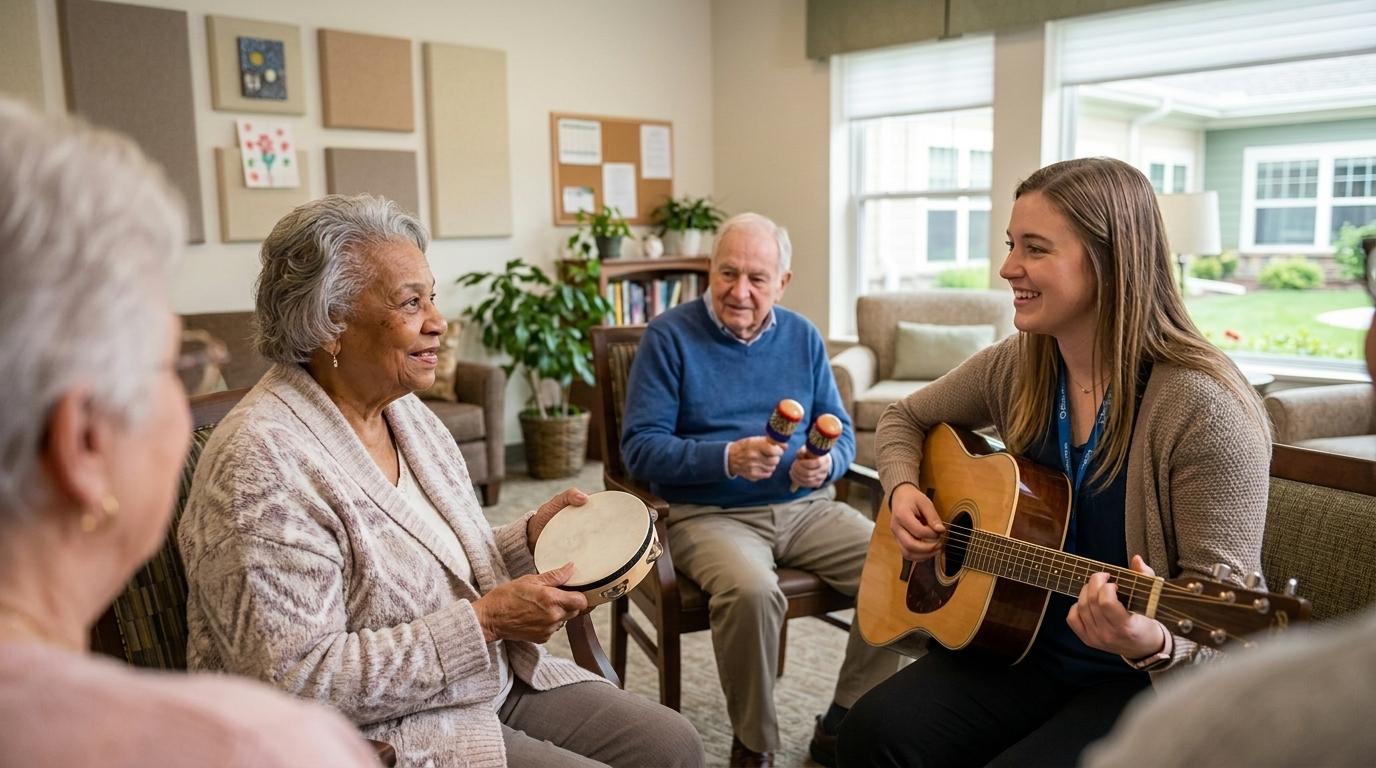
Many senior living communities have woven music therapy into their assisted living and memory care programs in thoughtful ways. Group music sessions bring residents together and spark social connection in a relaxed, joyful setting. Singing a shared song can build bonds that daily routines alone might not.
Personalized playlists are another meaningful touch. When a resident’s care plan includes music from their own life story, the experience feels familiar and comforting rather than clinical. That personal detail can make a real difference in how someone responds to their environment each day.
How to Support a Loved One Through Music
Simple Ways Families Can Help
Sharing a playlist of your loved one’s favorite songs from their younger years is a simple, loving gesture. It can open up conversation and connection, even on a short visit.
Ask the team at your loved one’s senior living community about music therapy options. Many communities welcome that kind of conversation and appreciate when families are involved in shaping a loved one’s experience.
Find the Right Community for Your Loved One
Regular music activities can show that a community values engagement and emotional well-being alongside physical care. When each resident’s history and preferences are considered, these activities can feel more personal and meaningful. Music therapy can support comfort, connection, and engagement as part of daily life.
At The Legacy of Farmington, our approach to senior living includes opportunities for meaningful activities and connection. Reach out today to schedule a tour.